


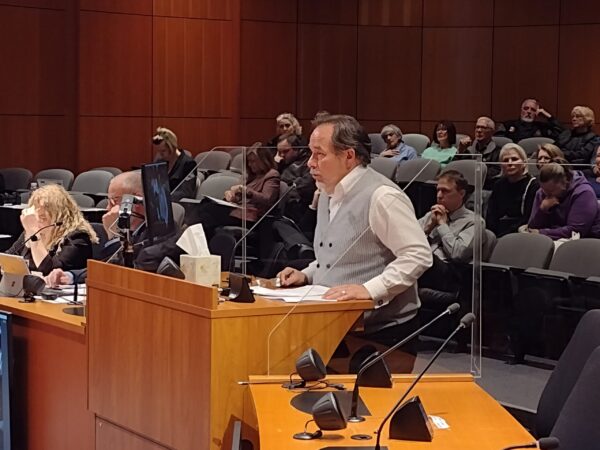

A Nanaimo lawyer is pushing the B-C Supreme Court to rule on issues of clarity and transparency in the way municipalities get public approval for big projects.
Sandford Bartlett says several incorrectly run Alternative Approval Processes have led to a full-day hearing to clarify the process and how future AAPs are run.
Bartlett was the lawyer who pointed out what he calls ‘areas of noncompliance’ in the two AAPs that were run by the City of Nanaimo during attempts to borrow $48.5 million for a new public works building.
Sandford says the hearing is slated for a full day in September and could force municipalities across BC to be more transparent with taxpayers, as well as provide clarification on processes and justify why councils feel using an AAP is in the best interests of residents.
“It would identify, in a clear way, what process must be followed,” Bartlett says. “So far, they [municipal government] have been following the process, which I feel isn’t the proper process.”
Change is part of any process, but Bartlett says setting a clear set of guidelines that set the tone for each municipality should be established going forward if regional districts intend on using the AAP format.
“If the judge says this process must be followed if you’re going to do an AAP you have to follow this process, then that would be a precedent-setting case,” Bartlett says. “All of the municipalities across BC have conducted AAPs the same way.”
Bartlett will present his case in front of the Supreme Court of BC in September but says it could take up to 90 days for a judge to rule on the case.
The trial comes after he was consulted by several organizations on Vancouver Island, from Nanaimo to Victoria, on the legitimacy of the Alternative Approval Processes being run in those areas.
According to the province, Alternative Approval Processes are used in municipal matters including boundary extensions, loan authorizations, changes to municipal classification, disposal of certain utilities [other than water or sewage systems], parkland decisions, and granting an exclusive or limited franchise.
Councils often justify their use as being quicker and cheaper than putting large borrowing questions to the public in formal referendums.
The AAP process was established in 1962 under the ‘counter-petition process’ to gather 10 per cent of electors who were opposed to the government’s decisions around projects. The process was changed in 2003 to reflect today’s AAP process.