



Organizers of the Kus-Kus-Sum restoration project marked a major milestone this week with the removal of a retaining wall along the Courtenay River at the former mill site.
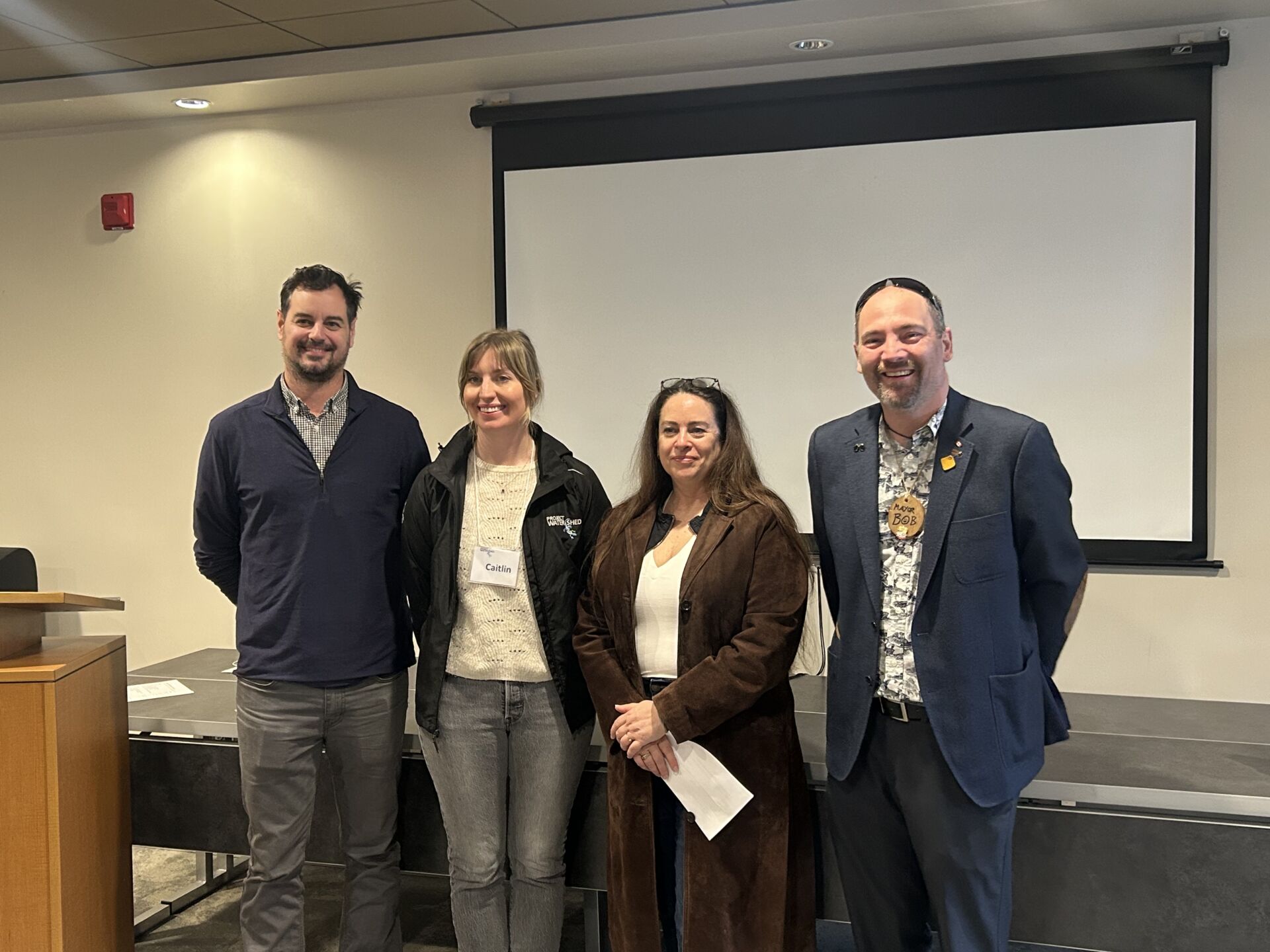
A gathering was held Thursday, Jan. 22, at the Old House Hotel in Courtenay to celebrate progress on the project, which aims to restore 8.3 acres of former industrial land to functioning estuarine habitat.
Project Watershed executive director Caitlin Pierzchalski said much of the heavy construction work is now complete, although restoration efforts will continue as the area returns to its natural state.
“We’ll be doing extensive ecological monitoring on site,” said Pierzchalski. “Then working with KFN [K’ómoks First Nation] and the City of Courtenay on what the long-term stewardship and land transfer looks like over the next year or two.”
She thanked the City of Courtenay and the K’ómoks First Nation for their guidance and collaboration in advancing the project.
The removal of the 400-metre steel retaining wall marks the final major construction phase of the restoration. Work is expected to be completed by mid-February, allowing tidal flow to return to the site for the first time in decades and reopening access for salmon and other wildlife.
“We have harvested and managed salmon using our fish trap complex here for millennia, which, as you are probably aware, sits within the Comox estuary, up the Courtenay River and out to the Salish Sea,” said K’ómoks First Nation director of intergovernmental relations Sheridan Barnett, who was speaking on behalf of elected chief Nicole Rempel.
Courtenay Mayor Bob Wells said the start of wall removal reflects years of collaboration among local governments, Project Watershed and community partners.
“To have this reconciliation project with K’ómoks First Nation is something well beyond anything I have ever imagined,” said Wells. “I’m just so inspired.”
Wall removal is being carried out by PPM Civil Constructors using a barge-mounted crane. Work began in mid-January and is expected to take six to seven weeks, weather permitting. Crews are working within a designated environmental window to reduce risk to fish and other species.
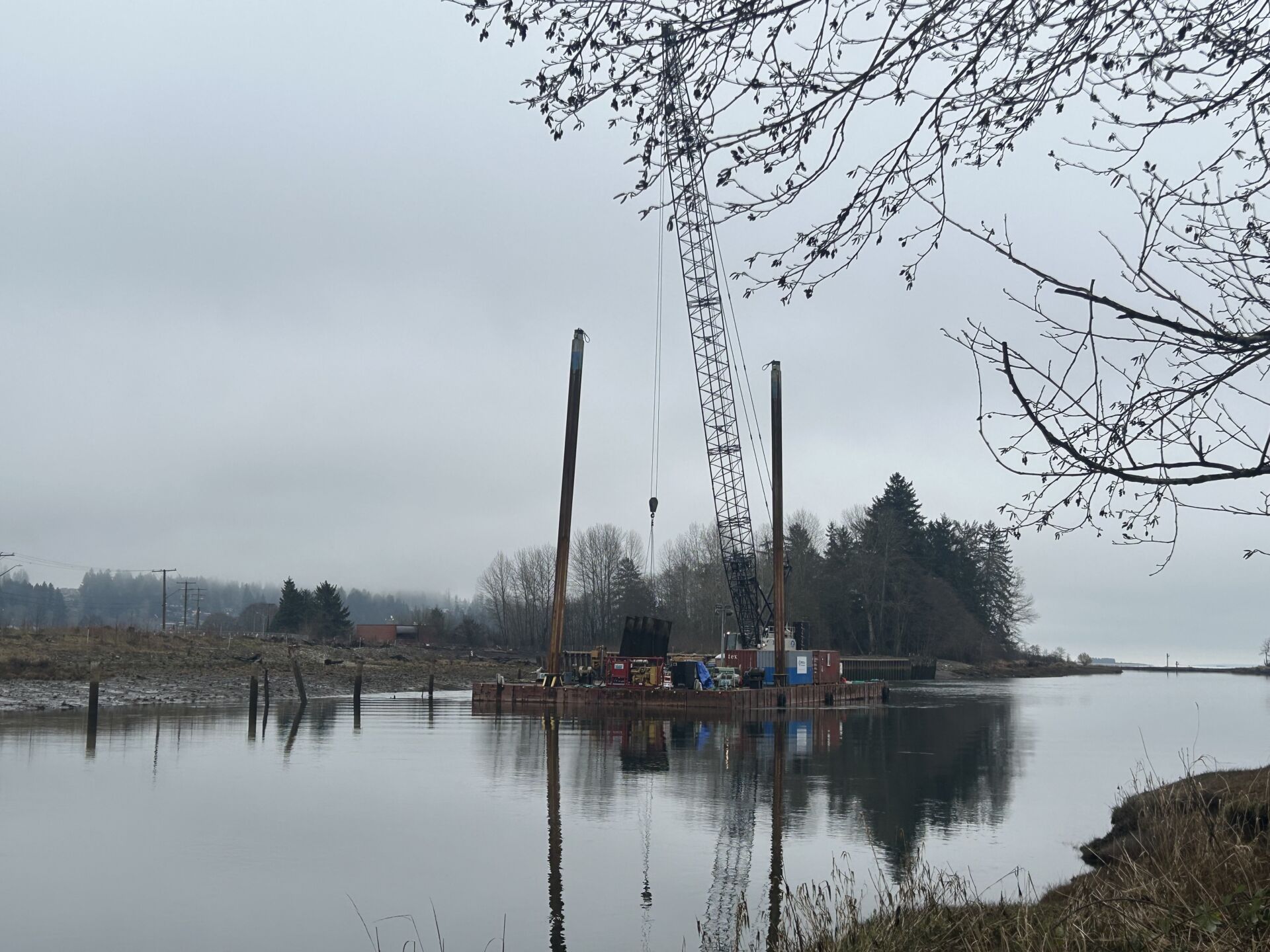
Photo Credit: Wylie Henderson
Once the wall is fully removed, tidal waters will once again flow across the restored terrain, allowing juvenile salmon and other wildlife to access habitat that has been blocked for generations.
Kus-Kus-Sum, once the site of the Field Sawmill that began operations in 1949, is set to transition from an to an estuarine ecosystem under future K’ómoks First Nation stewardship.



You must be logged in to post a comment.